핸드폰:
+86 0319 2296164
이메일:
info@lijiresin.cn
집
제품
강산 양이온 교환 수지
약산성 양이온 교환 수지
강염기 아이온 교환 수지
약염기 음이온 교환 수지
흡착 수지
촉매 수지
킬레이트 수지
혼합층 수지
습식야금 수지
특수 수지
회사 소개
애플리케이션
물 처리
식품 산업
합성 화학 및 석유화학 산업
제약 산업
혈액 관류
습식제련
동영상
소식
문의하기
한국인
Arabic
Belarusian
Bengali
Dutch
English
French
German
Hungarian
Indonesian
Italian
Japanese
Korean
Kyrgyz
Russian
Spanish
Swedish
Tagalog
Thai
Turkish
Vietnamese
소식
집
>
소식
Mar. 31, 2026
Comprehensive Guide to Black Water Softener Resin for Optimal Water Quality
Hard water can cause a multitude of issues, from scale buildup in pipes and appliances to reduced effectiveness of soaps and detergents. A black water softener resin is a crucial component in removing these hardness minerals – calcium and magnesium – providing you with soft, usable water. This article will delve into the intricacies of black resin, its benefits, applications, and what to look for when choosing the right one for your needs. We'll explore how this technology can improve your water quality and protect your valuable assets.
자세히 보기 +
Mar. 28, 2026
Understanding Beads in Water Softener Systems for Optimal Performance
Water softeners are essential for households and businesses dealing with hard water. At the heart of these systems lie the resin beads, responsible for removing the minerals that cause hardness. This article provides an in-depth look at these beads, their function, types, maintenance, and lifespan. Understanding these crucial components will help you optimize your water softening system and ensure a consistent supply of soft water. Choosing the right resin beads is critical for efficient water softening
자세히 보기 +
Mar. 26, 2026
Understanding and Addressing Bad Water Softener Resin for Optimal Performance
Water softeners are essential for homes and businesses relying on hard water. However, over time, the resin within these systems can degrade, leading to a host of problems. This article will explore the causes of bad water softener resin, how to identify it, the consequences, and ultimately, how to address it with high-quality resin replacements from Lijiresin. Understanding these factors is critical for maintaining efficient and effective water softening. Several factors contribute to the degradation of water softener resin. The most common is oxidation, caused by chlorine and other oxidizing agents present in the water supply. Iron in the water can also foul the resin, creating buildup that reduces its efficiency. Another significant factor is physical wear and tear – the constant expansion and contraction during the regeneration cycle eventually weakens the resin beads. Finally, organic matter can contribute to biofouling, hindering the resin's ability to effectively exchange ions. Regular maintenance, including pre-filtration, can help mitigate these issues, but eventual replacement is unavoidable.
자세히 보기 +
Mar. 24, 2026
Exploring Aquatrol Resin Applications and Benefits Across Industries
In the realm of polymer chemistry, aquatrol resin stands out as a versatile material with a diverse range of industrial applications. This article explores the composition, properties, benefits, and applications of aquatrol resin, providing a comprehensive overview for engineers, manufacturers, and anyone interested in this fascinating material. Understanding its capabilities is key to unlocking innovative solutions in various industries. We will delve into its uses in water treatment, coatings, and beyond. Aquatrol resin is a unique type of polymer, typically an acrylic copolymer, designed to modify the surface tension of water. It's not a single compound, but a family of resins engineered to enhance water's spreading and wetting abilities. This is achieved through the incorporation of hydrophilic (water-attracting) monomers during the polymerization process. The resulting resin is highly effective even at low concentrations, making it an economical choice for various applications. The ability of aquatrol resin to modify water's behavior is the foundation of its versatility.
자세히 보기 +
Mar. 21, 2026
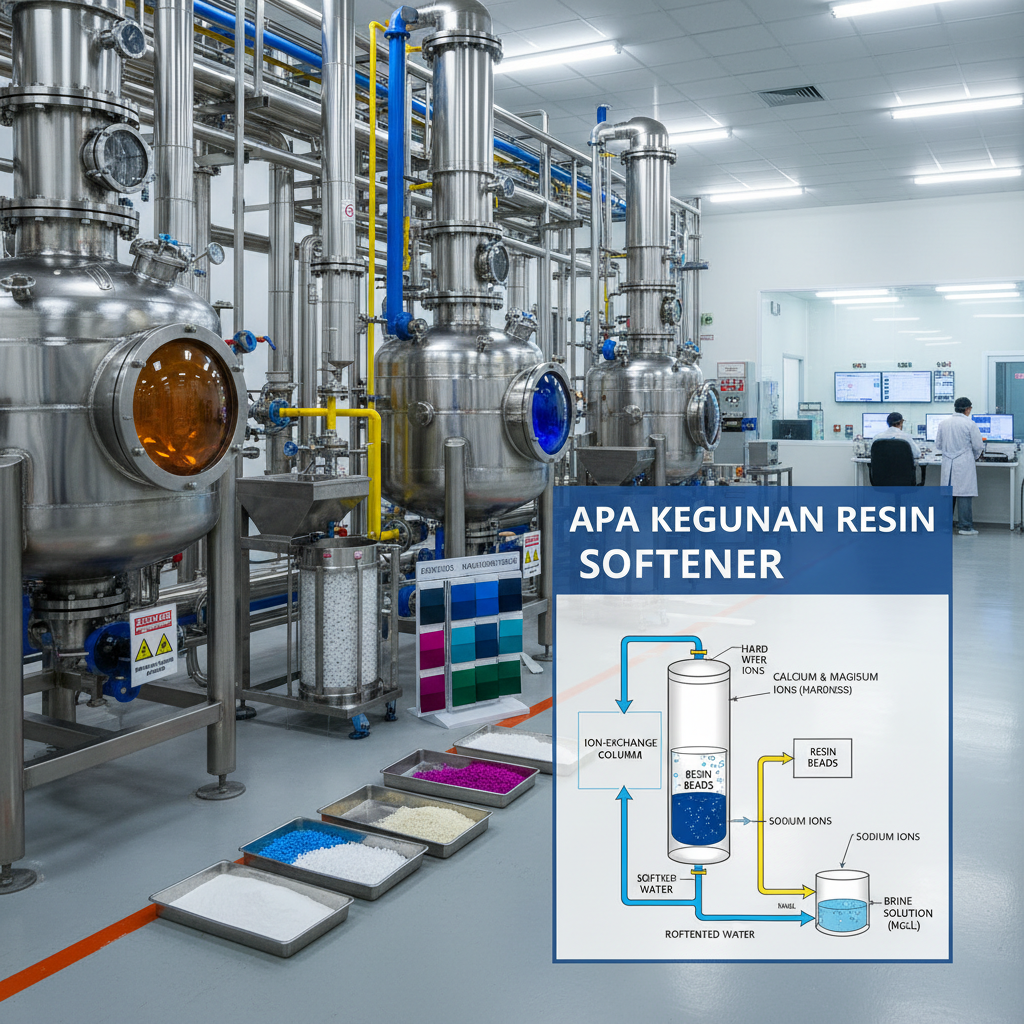
Understanding Apa Kegunaan Resin Softener For Optimal Water Quality
Understanding the purpose of a resin softener is crucial for anyone dealing with hard water issues. Hard water, rich in minerals like calcium and magnesium, can cause a multitude of problems – from scaling in pipes and appliances to reduced soap efficiency and skin irritation. A resin softener effectively removes these minerals, providing numerous benefits for both residential and industrial applications. This article will explore the functionality, applications, and advantages of using a resin softener, with insights from Liji Resin, a leading provider of high-quality resin solutions. A resin softener utilizes a process called ion exchange to remove hardness minerals from water. The core component is the resin, typically made of polystyrene beads. These beads are chemically charged and attract hard water minerals. As hard water flows through the softener, calcium and magnesium ions are exchanged for sodium ions, which are harmless. This process effectively "softens" the water, making it more usable and preventing the negative effects of hard water. Liji Resin offers a diverse range of resins specifically engineered for optimal softening performance. Resin softeners find applications across a wide spectrum of industries and residential settings.
자세히 보기 +
Mar. 19, 2026
Comprehensive Guide to Ammonia Removal Using Ion Exchange Resin Technology
Ammonia is a common contaminant in water sources, posing risks to both environmental and human health. Effectively removing ammonia is crucial in numerous applications, including wastewater treatment, aquaculture, and drinking water purification. Ion exchange resin is a widely employed technology for ammonia removal, offering a reliable and efficient solution. This article provides a detailed overview of ammonia removal using ion exchange resin, covering the principles, resin types, factors influencing performance, and applications. Understanding these aspects is essential for optimizing ammonia removal processes and ensuring water quality. Ion exchange is a reversible chemical process where ions are exchanged between a solid (the ion exchange resin) and a liquid (the water containing ammonia). Specifically for ammonia removal, the resin typically contains negatively charged functional groups.
자세히 보기 +
1
2
3
4
...
다음
Total: 70
관련 상품
강산 양이온 교환 수지 001X7H FC
001×7 H FC는 황산을 함유한 겔 형태의 강산성 양이온 교환수지 폴리스티렌 매트릭스로, 고체 황산과 동일합니다. 물 및 기타 액체의 연화, 해수담수화에 사용됩니다. 또한 글루탐산나트륨, 아미노산 및 항생제 추출에도 널리 사용됩니다.
자세히 보기 +
강산 양이온 교환 수지 001×7
001×7은 황산을 함유한 겔 형태의 강산성 양이온 교환수지 폴리스티렌 매트릭스로, 고체 황산과 동일합니다. 물 및 기타 액체의 연화, 해수 담수화에 사용됩니다. 또한 글루탐산나트륨, 아미노산 및 항생제 추출에도 널리 사용됩니다.
자세히 보기 +
혼합층 수지 MX910
MX910은 물을 직접 정화하는 특수 수지 혼합물입니다. 구성 수지의 비율이 최고 수준입니다. 특히 금속 합금의 부식으로 인해 발생할 수 있는 나트륨 및 기타 금속 양이온과 같은 미량의 양이온을 제거해야 하는 경우에 적합합니다.
자세히 보기 +
강산 양이온 교환 수지 001×10 FG
001×10 FG는 황산기를 함유한 겔 형태의 강산성 양이온 교환수지인 폴리스티렌 매트릭스로, 고체 황산과 동일합니다. 주로 식품 등급의 수처리 및 생화학 물질 추출에 사용됩니다.
자세히 보기 +
강산 양이온 교환 수지 001X7
001×7은 황산을 함유하는 겔 형태의 강산성 양이온 교환수지 폴리스티렌 매트릭스로, 고체 황산과 동일합니다. 주로 수처리 산업에 사용됩니다.
자세히 보기 +
거대 다공성 강염기성 음이온 교환 수지 D201 SC
D201 SC는 폴리스티렌 골격을 가진 거대망상 구조의 강염기성 음이온 교환수지로, 고체 알칼리에 해당하는 -N(CH3)3를 함유하고 있습니다. 우수한 물리적 내마모성과 화학적 침투 저항성을 가지며, 실리콘 제거 성능도 우수합니다. 주로 해수담수화에 사용되며, 시안화물 펄프의 cicc 흡착에도 사용할 수 있습니다.
자세히 보기 +
강산 양이온 교환 수지 001×9
001×9는 황산기를 함유하는 겔 형태의 강산성 양이온 교환수지인 폴리스티렌 매트릭스로, 고체 황산과 동등한 성능을 보입니다. 주로 수처리 및 생화학 물질 추출에 사용됩니다.
자세히 보기 +
약산성 양이온 교환 수지 D113 FC
D113 FC 수지는 아크릴 공중합체(-cooh) 그룹의 기공 구조에 카르복실산을 갖는 양이온 교환 수지입니다. 주로 산업용 수처리에 사용되며, 특히 중탄산염, 탄산염 및 기타 알칼리성 염을 제거하는 데 사용되며 아연, 니켈 폐기물 재활용, 생화학적 약물의 분리 및 정제 등에도 사용할 수 있습니다.
자세히 보기 +
거대 다공성 흡착 수지 AB-8
AB-8 Net Grade 거대 다공성 흡착 수지는 스티렌 유형의 약한 극성 공중합체입니다(가교제는 디비닐벤젠, 단량체는 메틸 아크릴레이트, 포로젠은 톨루엔 등). 스테비오사이드 및 알칼로이드와 같은 수용성 및 약한 극성 물질의 추출, 분리 및 정제에 적합합니다.
자세히 보기 +
강염기 음이온 교환 수지 201X8
201X8은 폴리스티렌 매트릭스 겔 형태의 강염기성 음이온 교환 수지이며, -N(CH3)3을 함유하고 있으며, 고체 알칼리와 동일합니다. 높은 교환 용량과 양호한 기계적 강도를 가지고 있습니다. 주로 순수 제조, 폐수 처리, 생화학 제품 및 금, 은, 텅스텐, 몰리브덴 및 기타 금속의 습식야금 추출에 사용됩니다.
자세히 보기 +
당사의 제품에 관심이 있으시면 여기에 정보를 남겨주세요. 빠른 시일 내에 연락드리겠습니다.