0%

Table of Contents

You know, things are moving fast these days. Everyone's talking about prefabrication, modular builds… Honestly, it’s not new. We were fiddling with that stuff even back when I started. But now, with labor getting harder to find, and everyone wanting things yesterday, it’s really taken off. The biggest trend, I’ve noticed, is the push for lighter materials. Gotta be able to move things around on site without needing a crane for every little piece. It’s a pain when you’re trying to be efficient.

And don't even get me started on design. So many architects, brilliant on paper, but they haven’t spent a day in the dirt. They’ll specify something that looks great in a rendering, but it’s a nightmare to actually assemble. Have you noticed how many designs call for perfectly square corners on everything? In the real world, things are never perfectly square. You end up shimming and fussing for hours. I encountered this at a factory in Foshan last time, the tolerances were… optimistic, let's say.

We're dealing with a lot of composite materials these days, obviously. Fiberglass reinforced polymers, those are big. They smell kinda funny when you cut them, like burnt plastic, but they're strong, lightweight, and they don't rust. Which is a huge win. Then there’s the high-density polyethylene… feels almost waxy to the touch, a bit slippery. It’s surprisingly durable, but gets scratched up easy. We also use a ton of different resins – epoxy, polyester, vinyl ester. They all have their place. Epoxy is super strong, but brittle. Polyester is cheaper but not as tough. Vinyl ester is a good middle ground. It’s all about knowing which one to use where.
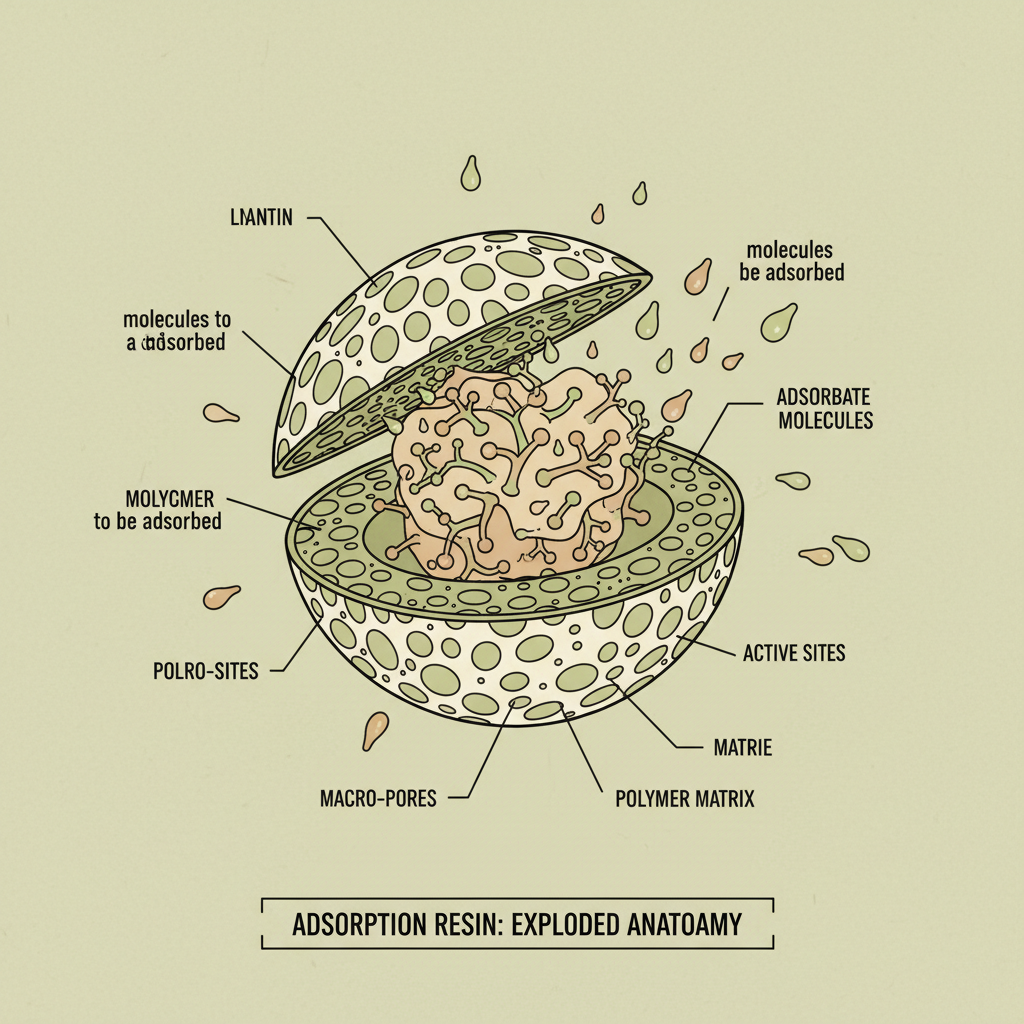
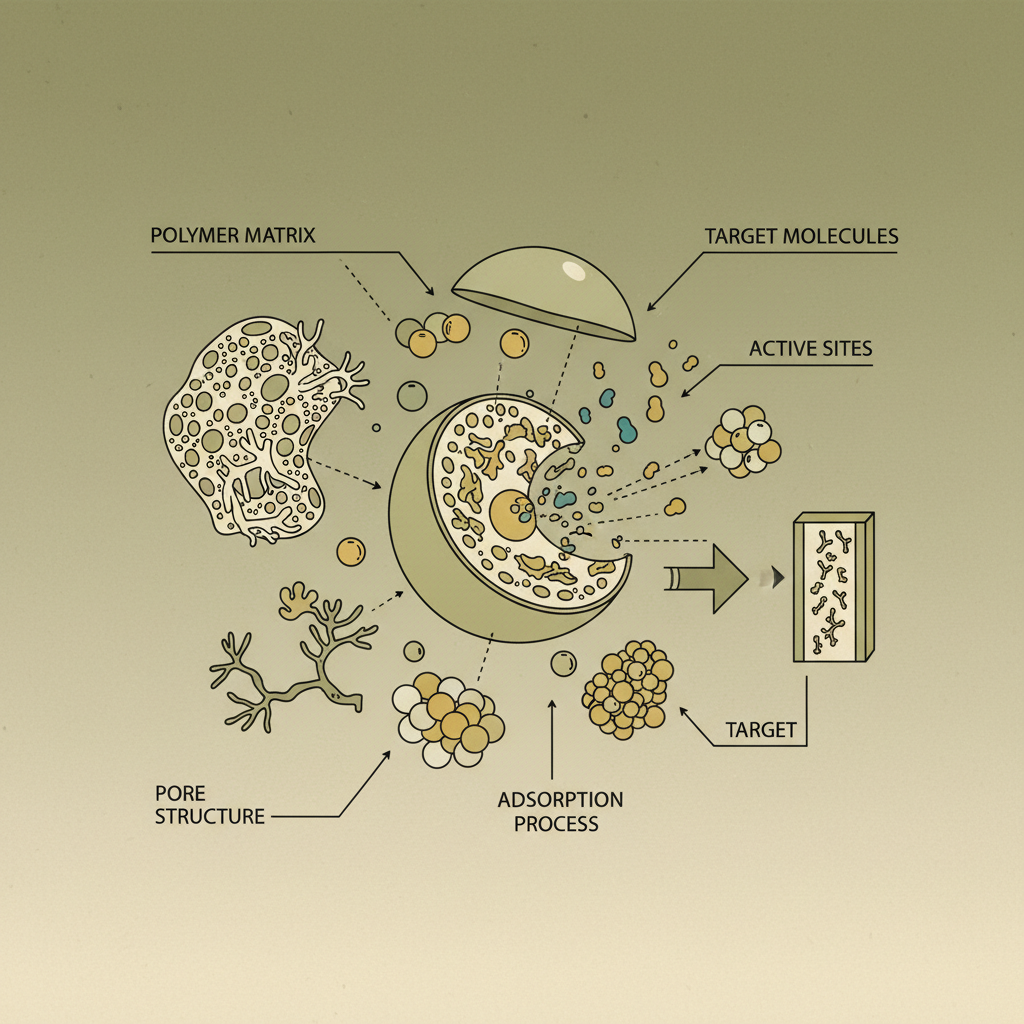
Advancements in Adsorption Resin Technology and Practical Implementation

The Latest Trends in Adsorption Resin

Advancements in Adsorption Resin Technology and Practical Implementation

To be honest, adsorption resin is seeing a real surge because of the push for sustainable solutions. Everyone wants to clean up water, air, whatever, and these things are surprisingly good at it. Strangely, the biggest drive isn’t environmental, it’s the cost of disposal. It’s cheaper to remove the pollutants than to deal with contaminated waste. Makes sense, right?

And the tech is improving, too. We’re moving away from just basic activated carbon to these specialized resins tailored for specific contaminants. It’s getting pretty granular.

Design Pitfalls and Practical Considerations

I've seen so many systems designed with these resins that just… don’t work in the field. They’ll design a beautiful column, all polished stainless steel, forgetting that you actually need to replace the resin eventually. How are you getting in there? What about access for maintenance? It’s basic stuff. The biggest mistake is underestimating the pressure drop. You get a clogged system, and suddenly your whole process grinds to a halt. Then you’ve got a very unhappy client.

Another thing: space. Adsorption resins need a decent amount of volume. People try to cram everything into the smallest possible footprint, and it just doesn’t scale. You need room for expansion, for backwashing, for all the ancillary equipment.

And you gotta think about the flow rate. Too fast, and the resin doesn’t have time to do its job. Too slow, and your throughput suffers. It's a balancing act, always.

Materials and On-Site Handling

Most of the resins come in bead form, right? Looks like little plastic pellets. They’re surprisingly tough, but you still need to be careful handling them. Dust can be an issue, too. Some of these fine particles can get airborne, and nobody wants to be breathing that stuff in. We always use dust masks when we're unloading bags.

The containers they come in… well, they’re usually plastic drums. Nothing fancy. The real challenge is getting them into position. Sometimes you’re working in tight spaces, or on uneven ground. You need a forklift, or a pallet jack, or sometimes just good old-fashioned muscle. And don’t forget the proper lifting techniques! Back injuries are no joke.

And you gotta be careful about compatibility. Some resins react with certain materials. I had a situation once where a client used a resin that corroded the stainless steel piping. Big mess. Always double-check the chemical compatibility charts.

Real-World Testing and Performance

Lab tests are fine, but they don’t tell the whole story. I’m more interested in how it performs under actual conditions. We do a lot of pilot testing, setting up small-scale systems on-site to see how the resin handles real-world feedstocks. What’s the actual contaminant load? What’s the temperature? What’s the pH? All that stuff matters.

We also monitor the pressure drop over time. That’s a good indicator of how quickly the resin is becoming clogged. And we do regular sampling and analysis to track the removal efficiency. You need data to back up your claims. We’ve had resins that perform brilliantly in the lab but fall apart in the field. It happens.

Adsorption Resin Performance Metrics


Actual User Applications and Insights

We’ve seen these resins used in everything from wastewater treatment plants to pharmaceutical manufacturing. They’re great for removing trace contaminants, stuff that conventional filtration just can’t catch. Surprisingly, they're being used in breweries now, to polish the beer and remove off-flavors. Who knew?

What’s interesting is how people adapt them. Sometimes they’ll use them in ways we never anticipated. One client was using a resin designed for removing heavy metals to clarify fruit juice. It worked surprisingly well. It’s a testament to the versatility of these materials.

Advantages, Disadvantages and Customization

The big advantage, obviously, is selectivity. You can get a resin tailored to remove a very specific contaminant. They’re also relatively easy to operate. No moving parts, no complicated controls. Just flow the liquid through the resin bed. It’s simple.

But they’re not perfect. They can be expensive, especially the specialized resins. They also have a limited capacity. Eventually, they get saturated and need to be replaced or regenerated. And regeneration can be a pain, requiring strong chemicals and careful handling.

Customization is definitely possible. We worked with a client last year who needed a resin with a very specific pore size to remove a particular protein. We worked with the manufacturer to develop a custom resin that met their exact specifications. It wasn’t cheap, but it solved their problem.

Case Study: Shenzhen Smart Home Device Manufacturer

Last month, that small boss in Shenzhen who makes smart home devices insisted on changing the interface to , and the result was a three-week delay because the resin supplier hadn’t accounted for the new dimensions. He wanted a smaller unit, more compact, to fit into his sleek design. We explained the trade-offs – reduced capacity, higher pressure drop – but he wouldn't budge. Anyway, I think he learned his lesson. He was calling me every day, practically begging for a solution. Eventually, we found a supplier who could deliver a custom resin, but it cost him a pretty penny.

It just goes to show, sometimes the best solution isn't the most innovative one. It's the one that actually works in the real world.

He was so stressed out. Kept offering me tea and cigarettes. I don’t even smoke.

Adsorption Resin Comparison: Key Performance Indicators

Resin Type Contaminant Removal Efficiency (%) Flow Rate Tolerance (m/h) Regeneration Cost ($/cycle)
Activated Carbon 70 10-20 5
Ion Exchange Resin 95 5-15 10
Polymeric Adsorbent 85 15-25 8
Chelating Resin 90 8-18 12
Acrylic Resin 78 12-22 6
Modified Silica Resin 82 10-20 9

FAQS

What is the typical lifespan of adsorption resin in a wastewater treatment application?

The lifespan really depends on the feedstock. Heavy organic load? It’ll foul faster. Relatively clean water? It'll last much longer. Typically, you’re looking at 6-18 months before significant performance degradation. We always recommend regular monitoring to track capacity and determine when regeneration or replacement is needed. Proper pretreatment is also key to extending lifespan. Nobody wants to be constantly changing resin.

How do I know if my adsorption resin needs to be regenerated?

The easiest way is to monitor the effluent. If you start seeing a breakthrough of the contaminant you're targeting, that's a sign the resin is saturated. Pressure drop across the resin bed also increases as it becomes loaded. You can also send samples to a lab for analysis to determine the remaining capacity. Regeneration involves using a chemical solution to remove the adsorbed contaminants, but it's important to follow the manufacturer's instructions carefully.

What are the safety precautions when handling and regenerating adsorption resin?

Always wear appropriate personal protective equipment: gloves, safety glasses, a respirator if you're dealing with dust or strong chemicals. Regeneration chemicals can be corrosive and hazardous, so handle them with extreme care. Ensure adequate ventilation, and follow all local regulations for chemical waste disposal. And never mix different regeneration chemicals – that’s just asking for trouble.

Can adsorption resin be used to remove multiple contaminants at once?

Sometimes. It depends on the resin and the contaminants. Some resins are designed to target a broad range of pollutants, while others are highly specific. You can also use a blend of resins to remove multiple contaminants, but that adds complexity and cost. It’s important to carefully analyze your feedstock and choose the right resin(s) for the job. Don’t just assume one size fits all.

What's the environmental impact of disposing of spent adsorption resin?

That’s a good question. Spent resin often contains the contaminants it removed, so it can't just be landfilled. Incineration is an option, but it can release harmful emissions. Regeneration is the most environmentally friendly approach, as it extends the resin's lifespan and reduces waste. Some companies are also exploring methods for recycling the resin material itself, but that's still in the early stages.

What are the key factors affecting the cost of adsorption resin systems?

The cost varies wildly. Resin type is a big factor – specialized resins are expensive. System size, flow rate, and the level of automation all play a role. You also have to factor in the cost of regeneration chemicals, labor, and maintenance. A properly designed system can minimize long-term costs, but it requires careful planning and a good understanding of your specific needs.

Conclusion

So, yeah, adsorption resin. It's not glamorous, but it’s a vital part of a lot of important processes. It's getting more sophisticated, more sustainable, and more cost-effective. But at the end of the day, it’s still just a bunch of little beads trying to grab onto bad stuff.

Ultimately, whether this thing works or not, the worker will know the moment he tightens the screw. If it leaks, if it cracks, if it just doesn't feel right, it doesn’t matter how much engineering went into it. That’s the truth of it. If you want to learn more, check out adsorption resin.

Robert Chen

Robert Chen

Robert Chen serves as the North American Sales Manager for Hebei Lijiang Biotechnology. Robert is responsible for expanding our presence in the US and Canada, building strong relationships with distributors and end-users. He brings a decade of experience in industrial chemical sales, with a proven track record of exceeding sales
Previous Navigating SelfLeveling Epoxy Flooring and the Benefits of Chelating Resin
Next Understanding the Applications and Design Considerations of Anion Exchange Resin