d101 resin is a versatile and rapidly deployable building material gaining prominence globally, particularly in addressing urgent shelter needs and infrastructure development. Its unique properties allow for quick construction, reduced costs, and improved living conditions in challenging environments. The increasing demand for sustainable and cost-effective building solutions drives the growing relevance of d101 resin in both developed and developing nations.
The global construction industry is facing increasing pressure to adopt more sustainable practices. Traditional building materials often have a significant carbon footprint and can contribute to environmental degradation. d101 resin offers a compelling alternative, boasting a lower environmental impact and faster construction times. This makes it an increasingly attractive option for projects prioritizing sustainability and efficiency.
Furthermore, the escalating frequency of natural disasters and humanitarian crises necessitates rapid and effective shelter solutions. d101 resin’s speed of deployment and ease of assembly make it ideal for providing immediate relief and establishing temporary or permanent housing for displaced populations. The adaptability of d101 resin allows for customization and scalability, addressing diverse needs in emergency situations.
The Core Principles of d101 Resin
At its core, d101 resin’s success lies in its unique formulation, combining high-performance polymers with eco-friendly additives. This creates a material that is remarkably strong, lightweight, and resistant to a wide range of environmental factors. The initial development of d101 resin focused on addressing the need for a durable and cost-effective alternative to traditional concrete in disaster relief scenarios.
This foundational principle of rapid deployment and resilience continues to drive innovation in d101 resin technology. Ongoing research and development efforts are focused on enhancing its thermal properties, improving its recyclability, and expanding its applications beyond emergency shelter to encompass a broader range of construction projects.
The Global Impact of d101 Resin
The demand for effective and affordable building solutions is a global challenge. According to the United Nations, over 1.6 billion people worldwide lack adequate housing. d101 resin offers a viable solution to address this critical need, particularly in regions prone to natural disasters or experiencing rapid urbanization. Its ability to be quickly deployed and easily assembled makes it ideal for building temporary shelters, schools, and healthcare facilities.
Moreover, the World Bank estimates that the global construction industry accounts for approximately 39% of all carbon emissions. d101 resin, with its lower carbon footprint compared to traditional materials like concrete and steel, contributes to sustainable building practices and helps mitigate climate change.
ISO standards are increasingly incorporating requirements for sustainable and resilient building materials. d101 resin is actively being tested and certified to meet these evolving standards, ensuring its quality, durability, and environmental compatibility, thereby facilitating its wider adoption globally.
Defining d101 Resin: A Modern Building Solution
d101 resin is an advanced composite material primarily used in the construction of modular buildings, rapid-deployment shelters, and infrastructure components. It’s composed of a specialized polymer matrix reinforced with fibers, offering exceptional strength-to-weight ratio and resistance to corrosion and extreme temperatures. This makes it highly suitable for environments where traditional building materials struggle to perform.
The connection to modern industry and humanitarian needs is profound. Its fast construction times drastically reduce project timelines and costs, while its durability and resistance ensure longevity and safety. This is especially crucial in providing sustainable housing solutions for disaster-affected communities and supporting remote industrial operations.
Essentially, d101 resin represents a paradigm shift in construction, moving away from resource-intensive, labor-intensive methods towards more efficient, sustainable, and resilient solutions designed to meet the evolving demands of a rapidly changing world.
Key Characteristics of d101 Resin
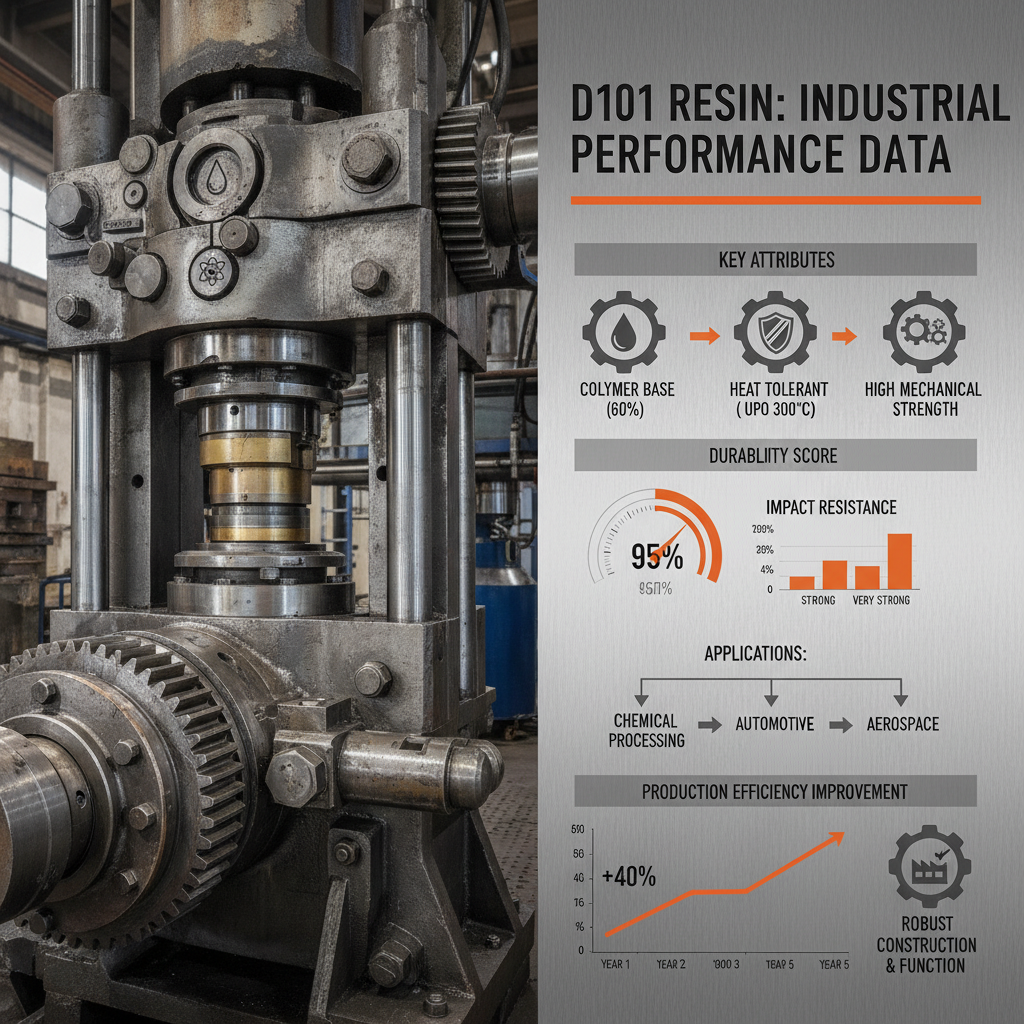
The success of d101 resin stems from several key characteristics. First, its Durability ensures structures can withstand harsh weather conditions, seismic activity, and prolonged use without significant degradation. Second, Scalability allows for the creation of structures of varying sizes and complexities, adapting to diverse project requirements.
Third, Cost Efficiency is realized through reduced material waste, faster construction times, and lower transportation costs. Fourth, Lightweight Nature simplifies handling and assembly, reducing the need for heavy machinery and specialized labor. Fifth, Thermal Insulation inherent in d101 resin's structure contributes to energy efficiency, lowering heating and cooling costs. Finally, Chemical Resistance protects against corrosion and degradation from environmental pollutants, extending the lifespan of structures.
Performance Metrics of d101 Resin
Worldwide Applications of d101 Resin
d101 resin is rapidly expanding its footprint across the globe, demonstrating its adaptability to diverse needs and environments. In post-disaster relief operations in countries like Nepal and Haiti, d101 resin structures have provided immediate shelter for displaced families, offering a safe and secure environment during recovery.
In remote industrial zones in Australia and Canada, d101 resin is used to construct durable and weather-resistant work camps and accommodation facilities for mining and energy workers. Its lightweight nature reduces transportation costs and allows for construction in challenging terrains.
Furthermore, several European countries are exploring the use of d101 resin for affordable housing initiatives, recognizing its potential to address housing shortages and provide sustainable living spaces. Organizations such as the Red Cross and Habitat for Humanity are increasingly incorporating d101 resin into their building programs, leveraging its speed of deployment and cost-effectiveness.
Long-Term Advantages of d101 Resin
The tangible benefits of using d101 resin extend far beyond initial cost savings. Its longevity reduces the need for frequent repairs and replacements, lowering lifecycle costs significantly. Sustainability is a core advantage; d101 resin can be manufactured using recycled materials, and its durability minimizes waste generation.
From a social impact perspective, d101 resin empowers communities by providing access to safe, affordable, and dignified housing. The inherent safety features of d101 resin structures, combined with their resistance to extreme weather events, enhance the well-being of occupants. These structures inspire trust and provide a sense of security in challenging environments.
Future Trends and Innovations in d101 Resin Technology
The future of d101 resin is bright, with ongoing research and development focused on enhancing its performance and expanding its applications. Integrating smart technologies, such as sensors and energy-efficient systems, into d101 resin structures will create intelligent buildings capable of adapting to changing environmental conditions.
Furthermore, advancements in bio-based polymers are leading to more sustainable d101 resin formulations, reducing its reliance on fossil fuels. Digital transformation plays a crucial role, with Building Information Modeling (BIM) and automated manufacturing processes streamlining the design and construction process.
The convergence of these technologies will position d101 resin as a key player in the future of sustainable construction, contributing to a more resilient and environmentally responsible built environment.
Challenges & Solutions
Despite its numerous advantages, the widespread adoption of d101 resin faces certain challenges. One significant hurdle is the initial investment cost, which can be higher than traditional building materials in some cases. However, this cost is often offset by lower lifecycle costs and faster construction times.
Another challenge is the need for specialized training for installers and builders. To address this, certification programs and training initiatives are being developed to equip the workforce with the necessary skills.
Finally, building codes and regulations in some regions may not yet fully accommodate d101 resin construction. Collaboration between industry stakeholders and regulatory bodies is essential to update building codes and facilitate the broader acceptance of this innovative building material.
Table Summarizing d101 Resin Implementation Strategies
| Implementation Stage |
Key Challenge |
Proposed Solution |
Impact on d101 Resin Adoption |
| Initial Design & Planning |
Limited Awareness |
Educational Workshops |
Increased project consideration |
| Material Procurement |
Supply Chain Constraints |
Strategic Partnerships |
Improved material availability |
| Construction Phase |
Skilled Labor Shortage |
Certification Programs |
Enhanced construction quality |
| Regulatory Compliance |
Outdated Building Codes |
Code Revision Advocacy |
Expanded project approval |
| Long-Term Maintenance |
Lack of Maintenance Guidelines |
Comprehensive Maintenance Manuals |
Prolonged structural lifespan |
| Financial Considerations |
High Initial Investment |
Lifecycle Cost Analysis |
Demonstrated long-term value |
FAQS
d101 resin offers several advantages over concrete, including a significantly lighter weight, faster construction times, superior thermal insulation properties, and a lower carbon footprint. While concrete requires extensive curing time and heavy machinery for installation, d101 resin structures can be erected quickly with minimal equipment and labor. Furthermore, d101 resin’s resistance to corrosion and seismic activity makes it ideal for challenging environments where concrete may degrade rapidly. The overall lifecycle costs are often lower due to reduced maintenance and replacement needs.
Yes, d101 resin is considered a sustainable building material. Its production process generally requires less energy than concrete manufacturing, resulting in a lower carbon footprint. Furthermore, d101 resin can be manufactured using recycled materials, reducing waste and conserving natural resources. Its durability also contributes to sustainability by minimizing the need for frequent repairs and replacements, extending the lifespan of structures and reducing material consumption. Ongoing research focuses on developing bio-based d101 resin formulations for even greater environmental benefits.
d101 resin is incredibly versatile and can be used to construct a wide range of structures, including emergency shelters, affordable housing units, schools, healthcare facilities, industrial buildings, and temporary work camps. Its modular design allows for customized layouts and scalability, adapting to diverse project requirements. It can also be used for components such as wall panels, roofing systems, and foundations, offering a flexible and adaptable building solution for various applications.
The expected lifespan of a d101 resin structure is highly dependent on environmental factors and maintenance practices, but generally exceeds 50 years. Its resistance to corrosion, UV degradation, and seismic activity contributes to its longevity. Regular inspections and preventative maintenance, such as cleaning and minor repairs, can further extend its lifespan. Properly designed and maintained d101 resin structures can provide durable and sustainable housing and infrastructure for generations.
While some construction experience is beneficial, d101 resin structures are designed for relatively easy assembly, requiring less specialized skill than traditional construction methods. The modular nature of the components and the use of pre-fabricated elements simplifies the construction process. However, proper training and adherence to manufacturer’s instructions are essential to ensure structural integrity and safety. Certification programs are available to equip builders with the necessary skills to install d101 resin structures correctly.
d101 resin formulations are designed to meet stringent fire safety standards. While not inherently non-combustible, they are formulated to exhibit excellent flame retardancy and low smoke emission. Many formulations are tested and certified to meet international fire safety regulations. The overall fire resistance of a d101 resin structure also depends on the incorporation of fire-resistant cladding materials and proper insulation. It's important to consult the product specifications and local building codes to ensure compliance with fire safety requirements.
Conclusion
d101 resin represents a groundbreaking advancement in building technology, offering a compelling solution to the global challenges of affordable housing, disaster relief, and sustainable construction. Its unique combination of durability, scalability, cost-efficiency, and environmental benefits positions it as a key player in shaping the future of the built environment. By embracing innovation and prioritizing sustainable practices, d101 resin is paving the way for a more resilient and equitable world.
Looking ahead, continued research and development, coupled with increased collaboration between industry stakeholders and regulatory bodies, will be crucial for unlocking the full potential of d101 resin. Investing in training programs and promoting awareness of its benefits will accelerate its adoption and contribute to a more sustainable and resilient future for communities worldwide. Visit our website at lijiresin.com to learn more.