0%

Table of Contents

Iminodiacetic acid chelating resin represents a significant advancement in separation science and industrial processing. Its unique ability to selectively bind metal ions makes it invaluable across a spectrum of applications, from wastewater treatment and hydrometallurgy to pharmaceutical purification and analytical chemistry. The global demand for efficient and environmentally responsible separation technologies is driving increased interest and innovation in this field. Understanding the principles and applications of iminodiacetic acid chelating resin is crucial for professionals in these industries, as well as researchers seeking to develop novel solutions to complex challenges.

The versatility of iminodiacetic acid chelating resin stems from its molecular structure, allowing tailored selectivity for specific metal ions. This is particularly important in addressing concerns surrounding heavy metal contamination in water sources and the recovery of valuable metals from industrial waste streams. As stricter environmental regulations are implemented worldwide, the need for effective chelation technologies, like those utilizing this resin, will only continue to grow.

Furthermore, ongoing research focuses on enhancing the resin's stability, capacity, and reusability, paving the way for more sustainable and cost-effective industrial processes. The increasing focus on resource recovery and circular economy principles further amplifies the relevance and importance of iminodiacetic acid chelating resin in the global landscape.
Advancements in Iminodiacetic Acid Chelating Resin for Industrial Separation and Purification

Introduction to iminodiacetic acid chelating resin

Advancements in Iminodiacetic Acid Chelating Resin for Industrial Separation and Purification

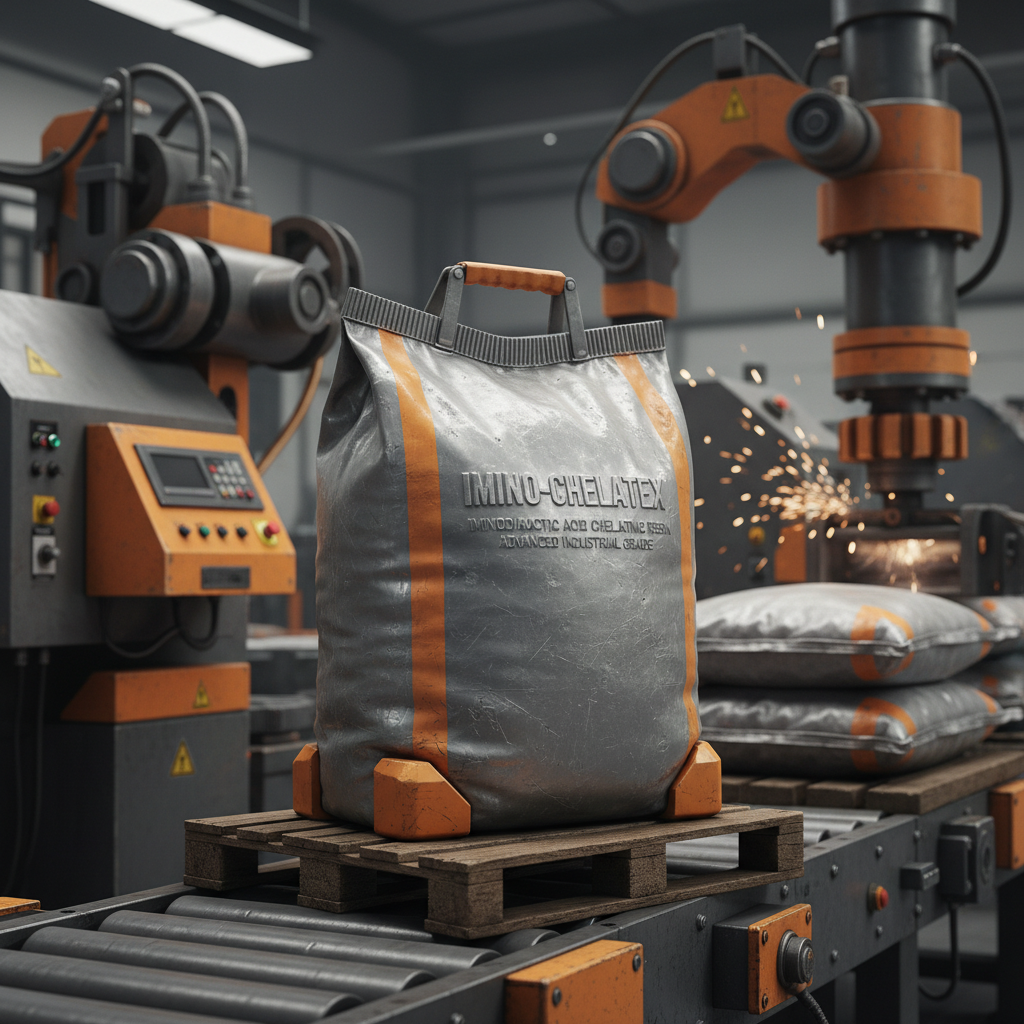
Iminodiacetic acid chelating resin is a synthetic polymeric material designed for the selective removal and recovery of metal ions from liquid solutions. Its structure features iminodiacetic acid groups covalently bonded to a polymer backbone, providing numerous chelation sites. These sites effectively bind to metal ions forming stable complexes, enabling their separation from complex mixtures. iminodiacetic acid chelating resin is broadly used in environmental remediation.

The development of this resin represents a significant improvement over traditional chelation methods, offering advantages such as higher selectivity, greater chemical stability, and easier regeneration. Its applicability extends to numerous industries, including mining, hydrometallurgy, pharmaceuticals, and food processing, highlighting its versatile nature and widespread utility.

Global Relevance and Applications

The global need for efficient water purification and resource recovery drives the demand for iminodiacetic acid chelating resin. According to the United Nations, billions of people lack access to safely managed drinking water, and industrial wastewater often contains harmful heavy metals. This resin offers a powerful solution for removing these contaminants, protecting public health and the environment. Hydrometallurgical processes, crucial for extracting valuable metals like copper and nickel, rely heavily on selective metal separation, where this resin plays a vital role.

ISO standards for environmental monitoring increasingly emphasize the importance of accurate metal ion analysis, driving demand for high-purity resins for sample preparation. Furthermore, the growing emphasis on circular economy principles, which prioritize resource reuse and minimize waste, encourages the implementation of technologies like this resin to recover valuable metals from industrial byproducts.

Countries with significant mining operations, such as Chile, Peru, and Canada, are major consumers of iminodiacetic acid chelating resin, utilizing it in metal recovery and wastewater treatment processes. Emerging economies facing rapid industrialization, like China and India, are also experiencing increasing demand due to stricter environmental regulations and a growing focus on sustainable development.

Defining iminodiacetic acid chelating resin

Iminodiacetic acid chelating resin is a specialized type of polymeric adsorbent engineered to selectively bind to metal ions. It comprises a solid, insoluble polymer matrix to which iminodiacetic acid (IDA) functional groups are chemically attached. These IDA groups possess nitrogen and oxygen atoms capable of forming coordinate covalent bonds with metal ions, a process known as chelation.

Unlike simple adsorption, chelation involves the formation of a stable, ring-like complex between the resin and the metal ion, providing high selectivity and strong binding affinity. This allows the resin to effectively remove specific metal ions from complex mixtures, even in the presence of competing ions. The resin can then be regenerated, releasing the bound metal ions and restoring its binding capacity for reuse.

The connection to modern industry and humanitarian needs is direct. Industries requiring ultra-pure materials, like pharmaceuticals and electronics, use this resin to remove trace metal contaminants. In humanitarian contexts, it’s employed in water purification systems to provide safe drinking water in regions affected by heavy metal pollution, directly impacting public health and well-being. iminodiacetic acid chelating resin is a critical component of modern solutions.

Key Properties of iminodiacetic acid chelating resin

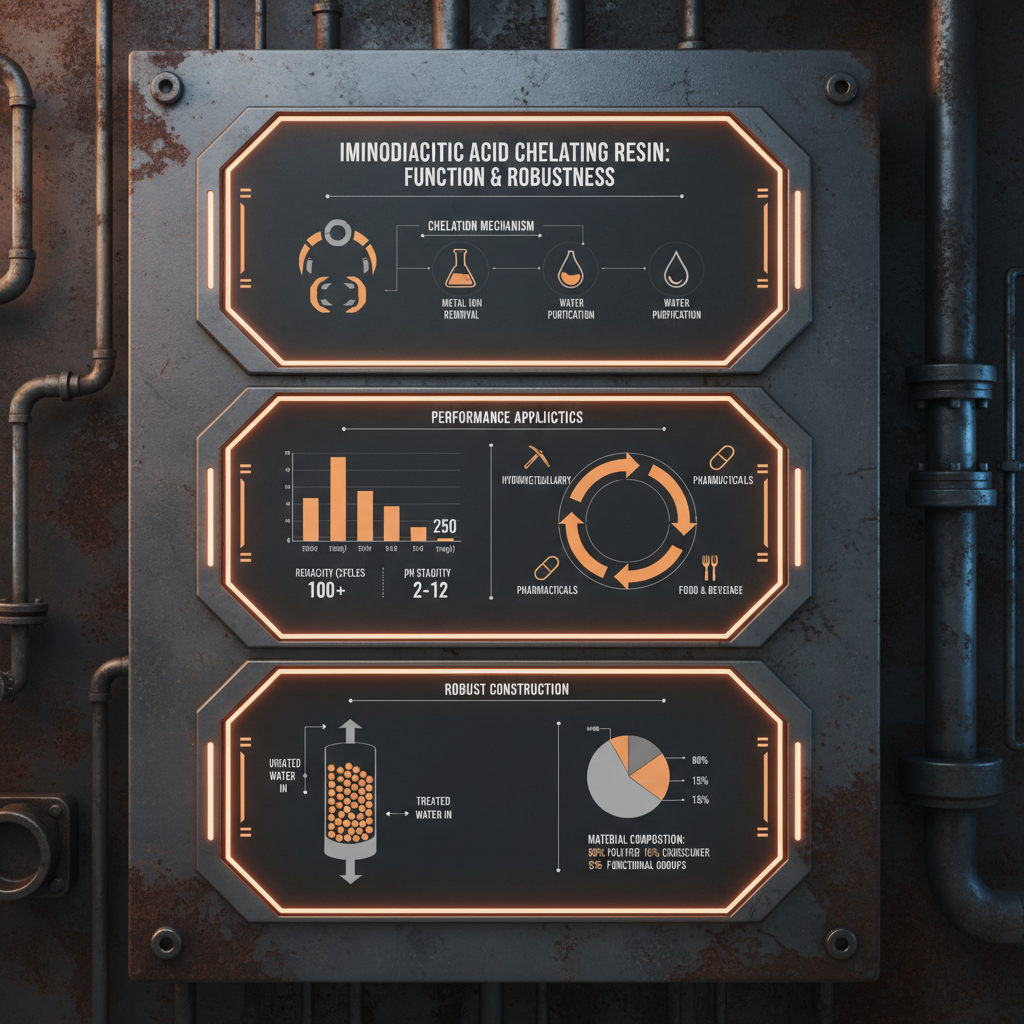
The efficacy of iminodiacetic acid chelating resin is derived from a set of core properties. Firstly, its Selectivity allows targeted removal of specific metal ions, minimizing interference from others. Secondly, its Capacity defines the amount of metal ions the resin can bind per unit volume, impacting process efficiency.

Thirdly, Chemical Stability ensures the resin remains functional under varying pH, temperature, and ionic strength conditions. Fourthly, Regenerability enables reuse of the resin, reducing operational costs and minimizing waste. Finally, Mechanical Strength dictates its durability and resistance to attrition during handling and operation.

iminodiacetic acid chelating resin Performance Metrics


Real-World Applications of iminodiacetic acid chelating resin

Iminodiacetic acid chelating resin finds wide application in wastewater treatment plants for removing heavy metals like lead, mercury, and cadmium. Its high selectivity ensures effective removal even at trace concentrations, meeting stringent environmental standards. The pharmaceutical industry utilizes it for purifying drug intermediates and removing metallic impurities from final products, ensuring drug safety and efficacy.

In the mining and hydrometallurgy sectors, this resin is instrumental in recovering valuable metals like gold, silver, and platinum from ore leachates. This not only improves metal recovery rates but also minimizes environmental pollution associated with mining operations. In analytical chemistry, it’s used for pre-concentration of trace metals prior to analysis, enhancing sensitivity and accuracy.

Advantages and Long-Term Value

The use of iminodiacetic acid chelating resin offers significant cost savings through its regenerability, reducing the need for frequent resin replacement. Its high selectivity minimizes waste generation, contributing to more sustainable industrial processes. From a social impact perspective, its application in water purification directly enhances public health in communities exposed to heavy metal contamination.

The reliability and consistent performance of the resin instill confidence in industries requiring strict quality control. The innovative technology provides a robust and environmentally responsible solution, fostering trust with stakeholders and contributing to a positive brand image. Overall, iminodiacetic acid chelating resin delivers a compelling combination of economic, environmental, and social benefits.

Future Trends and Challenges

Future trends point towards the development of advanced iminodiacetic acid chelating resins with enhanced selectivity, capacity, and biocompatibility. Nanotechnology is being explored to create resins with increased surface area and improved mass transfer characteristics. Integration with automated separation systems and real-time monitoring technologies will further optimize process efficiency.

Challenges include the potential for fouling by organic matter and the cost of resin regeneration. Research efforts are focused on developing anti-fouling coatings and more efficient regeneration methods. The integration of this technology into existing infrastructure and the development of standardized protocols for resin handling and disposal will also be crucial for widespread adoption.

Green chemistry approaches, aiming to minimize the environmental impact of resin production and regeneration, are gaining traction. Furthermore, the application of machine learning algorithms to optimize resin performance and predict metal ion binding behavior holds significant promise for improving process control and efficiency.

FAQS

What is the typical lifespan of an iminodiacetic acid chelating resin column?

The lifespan of an iminodiacetic acid chelating resin column depends on several factors, including the feed stream's composition, operating conditions (pH, temperature, flow rate), and the frequency of regeneration cycles. Typically, a well-maintained column can last between 2 to 5 years, but aggressive conditions or improper regeneration can shorten this lifespan. Regular monitoring of resin capacity and pressure drop is essential for optimal performance and longevity.

How does iminodiacetic acid chelating resin compare to other metal separation technologies?

Iminodiacetic acid chelating resin offers several advantages over traditional methods like precipitation, ion exchange, and solvent extraction. It boasts higher selectivity for specific metal ions, minimizing co-elution of unwanted species. Regeneration is typically simpler and more cost-effective than solvent extraction, and it avoids the use of hazardous organic solvents. While precipitation is cheaper, it often results in lower metal recovery rates and produces significant sludge waste.

What is the optimal pH range for using iminodiacetic acid chelating resin for copper removal?

The optimal pH range for copper removal using iminodiacetic acid chelating resin is typically between 5.5 and 7.0. At lower pH values, the binding affinity for copper decreases, while higher pH levels can lead to competition from other ions and potential resin degradation. Maintaining the pH within this range ensures maximum copper removal efficiency and resin stability. Precise pH control is essential for consistent performance.

Can iminodiacetic acid chelating resin be used to remove multiple different metal ions simultaneously?

While iminodiacetic acid chelating resin can bind to multiple metal ions, its selectivity diminishes as the complexity of the metal mixture increases. Optimizing the resin's structure and operating conditions (pH, flow rate) can enhance selectivity for specific metals. In cases requiring the simultaneous removal of numerous metal ions, a combination of resins with different selectivities or a multi-stage separation process may be necessary.

What are the typical regeneration procedures for iminodiacetic acid chelating resin after metal binding?

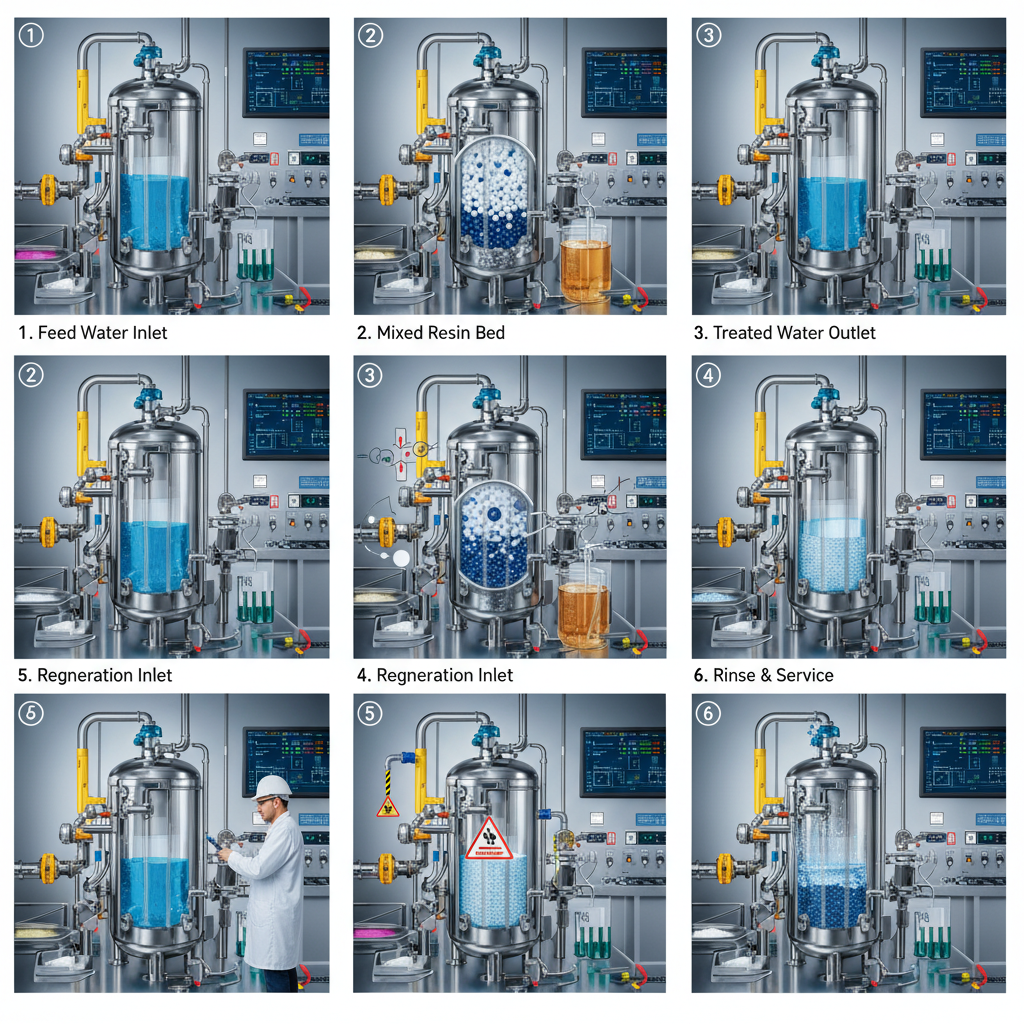
Regeneration typically involves eluting the bound metal ions using an acidic solution, such as dilute hydrochloric acid (HCl) or sulfuric acid (H2SO4). The choice of acid and its concentration depend on the specific metal ions bound to the resin. After elution, the resin column is rinsed thoroughly with deionized water to remove any residual acid and metal ions before being returned to service. Proper regeneration is crucial for maintaining resin capacity and longevity.

Is iminodiacetic acid chelating resin environmentally friendly?

Compared to many traditional metal separation methods, iminodiacetic acid chelating resin is considered more environmentally friendly. It eliminates the use of hazardous organic solvents, minimizes waste generation through resin regenerability, and enables the recovery of valuable metals from waste streams. However, the production of the resin itself requires chemical synthesis, and the disposal of spent resin needs to be managed responsibly to avoid environmental contamination. Ongoing research focuses on developing more sustainable resin materials and regeneration processes.

Conclusion

Iminodiacetic acid chelating resin represents a pivotal technology for addressing critical challenges in water purification, resource recovery, and industrial process optimization. Its unique combination of selectivity, capacity, and regenerability makes it a versatile and sustainable solution across diverse applications. The long-term value lies not only in its cost-effectiveness but also in its contribution to environmental protection and public health.

Looking ahead, continued innovation in resin design, coupled with advancements in process automation and integration with digital technologies, will further enhance its performance and broaden its applicability. Exploring novel materials and regeneration strategies will pave the way for even more sustainable and environmentally friendly solutions. To learn more about how iminodiacetic acid chelating resin can benefit your operations, visit our website today.
Robert Chen

Robert Chen

Robert Chen serves as the North American Sales Manager for Hebei Lijiang Biotechnology. Robert is responsible for expanding our presence in the US and Canada, building strong relationships with distributors and end-users. He brings a decade of experience in industrial chemical sales, with a proven track record of exceeding sales
Previous Exploring the Versatility and Applications of Iminodiacetic Acid Resin
Next Advancements in Deionizing Resin Cartridge Technology and Industrial Applications